Discover Titan Network's Pioneering Role in the DePIN Revolution
Over the last six months, the concept of DePIN (Decentralized Physical Infrastructure Network) has captivated the tech community. This emerging blockchain protocol leverages token incentives to motivate participants to contribute resources - such as storage, bandwidth, computing power, and resources - towards building and maintaining a shared network infrastructure. Predictions suggest that by 2028, the DePIN market could be worth over $3.5 trillion. A prime example of DePIN's potential is seen in Filecoin, a leading project in the space, which has seen its value more than double in the last month alone. Following the introduction of the Filecoin Virtual Machine (FVM), its Total Value Locked (TVL) has soared past $230 million. Additionally, there's been a noticeable uptick in activity within the storage market: a 23% monthly increase coupled with a staggering 414% annual increase in transaction volume. The platform has also attracted over 1,800 clients who have uploaded datasets to Filecoin, marking a 10% monthly and 196% annual growth.
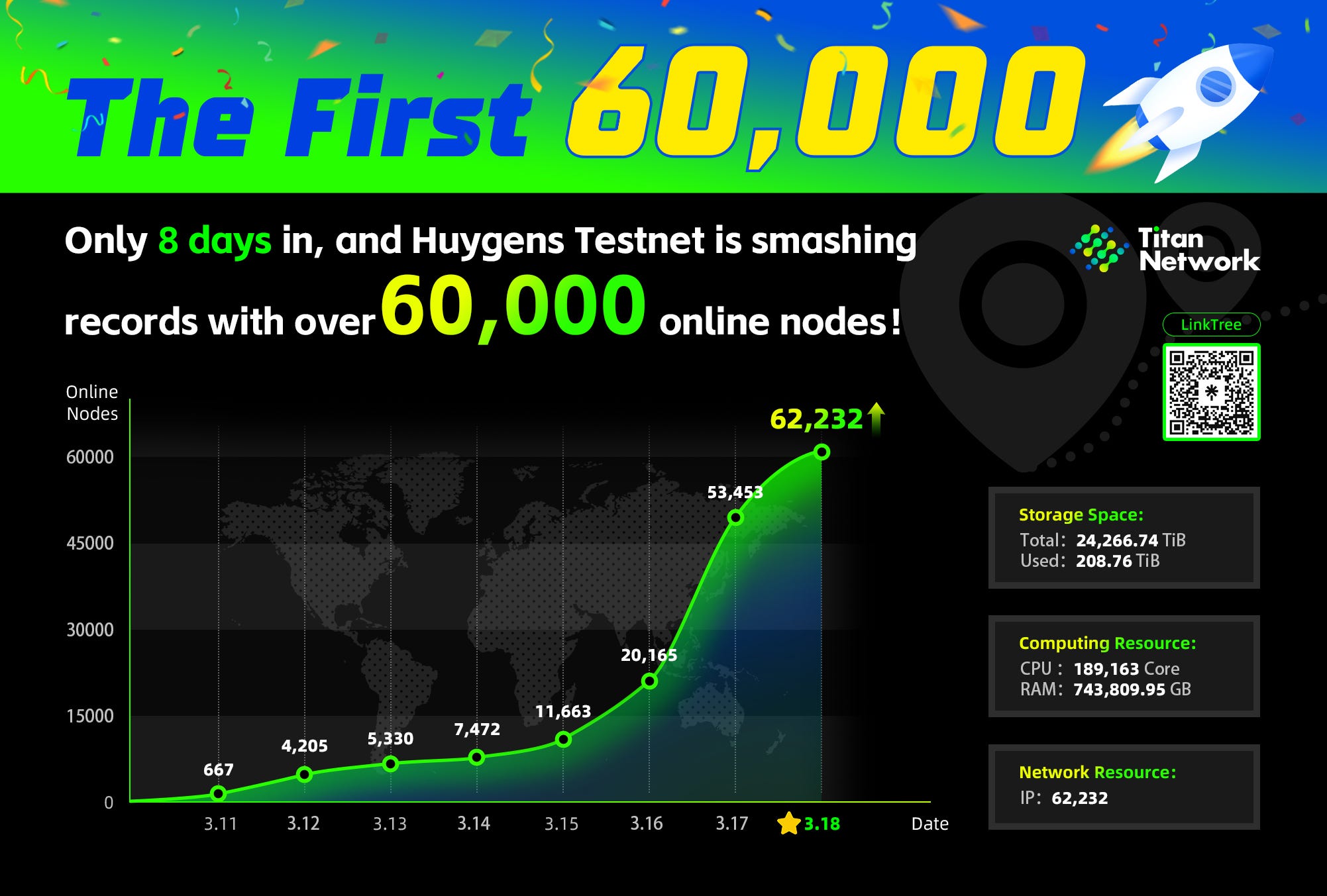
As interest in DePIN grows, the sector has become increasingly competitive, with numerous projects vying to define the landscape. Among these, Titan Network shines as a standout project. Although still in its testnet phase, its global node count has skyrocketed by nearly 2000% in just one week. This remarkable growth sparks widespread intrigue and speculation: What makes Titan Network so compelling?
Unlocking Idle Resources - Modern Challenges
Today, modern households possess a variety of unused technological devices, such as smartphones, tablets, laptops, desktop computers, and routers. Despite the potential of these idle resources, their effective utilization is hindered by several key challenges:
👉 Reliability Concerns: The dependability of these idle resources is fraught with challenges. Interruptions to home networks, power outages, or physical damage to the devices can lead to disruptions in service, making them unreliable for consistent use.
👉 Geographical Limitations: The scattered nature of idle resources poses significant problems. For instance, pairing storage capabilities in China with computing power in the USA involves complex data exchanges that suffer from latency and bandwidth issues due to the vast distances involved, deteriorating the overall user experience.
👉 Security Risks: There is a general hesitancy to share or lease idle home resources because of security fears. Concerns about malware, such as Trojan viruses, risk not just the idle devices but can potentially compromise the entire home network.
👉 Transparency in Profit Distribution: Prior to the introduction of new solutions like Titan Network, attempts to pool these idle resources often operated in a non-transparent manner. The specifics of profit generation and distribution from the utilization of these resources were not clearly communicated or understood by the device owners.
The Titan Network was born out of a need to address these multifaceted challenges.
The Story of Titan Network
Titan Network's story begins in the middle of 2021 as the first project to build the retrieval layer and CDN (Content Delivery Network) solution for Filecoin. In early 2022, Titan Network secured a substantial $1 Million grant from Protocol Labs to develop the ecosystem's tooling infrastructure. As the team achieved its milestones, it recognized an expansive opportunity to leverage idle community resources for a larger purpose beyond the creation of a hot storage layer.
What is Titan Network?
Titan Network is a digital resource network aimed at matching community idle resources with global demand. It allows everyone to easily leverage the power of DePIN services and participate in building the Internet of Value.
Titan Network has developed a universal DePIN service platform enabling anyone to direct or deploy hardware resources and provide interchangeable digital resources, such as compute, storage, and bandwidth, in return for crypto-rewards. Its built-in economic incentives and network design ensures resource contributors are rewarded while end users benefit from advanced, reliable, and high-quality cloud solutions. Further, the platform's open-source nature and low-barrier entry point encourages anyone in the ecosystem to participate in the construction of the Internet of Value and benefit from the community's growth.
Technical Architecture
Titan Network operates as a Layer 1 blockchain to orchestrate the community-constructed fog resource network. It utilizes Edge node container technology, which is compatible with ultra-lightweight hardware such as cell phones and edge devices. Additionally, it employs robust Guardian nodes capable of handling intensive computational tasks. These components are seamlessly integrated and managed by Validator nodes, which are responsible for executing consensus and scheduling tasks on the Titan Blockchain.
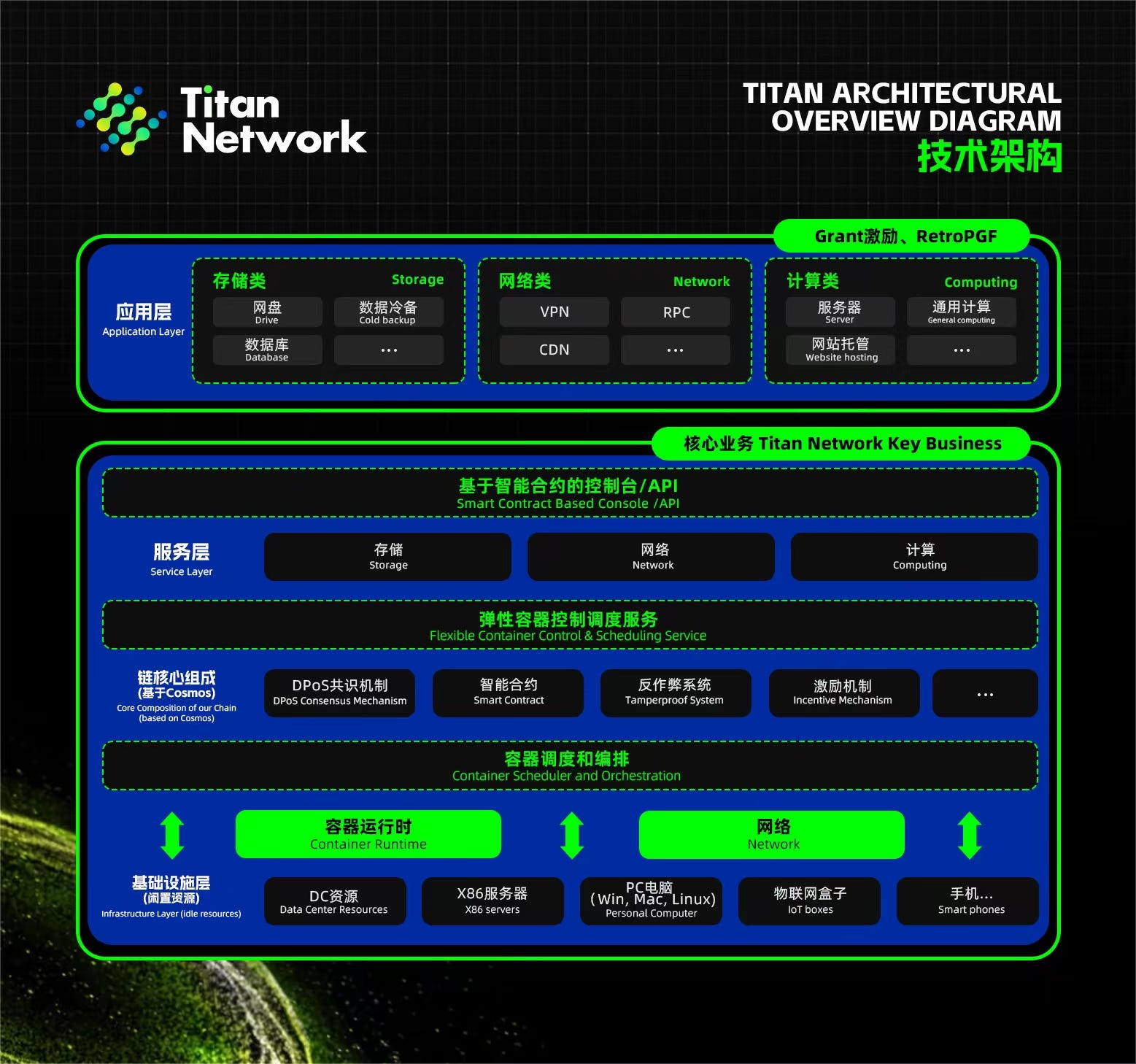
This structure enables the provision of traditional cloud services in a decentralized and open-source environment, along with new DePIN services such as hot storage, CDN acceleration, and verifiable random functions. Further, Titan Network also offers innovative, trustworthy storage and reliable container execution environments based on a decentralized network.
How Titan Network Solves Key Problems
👉 Openness and Transparency: At its core, Titan Network offers an open and transparent resource aggregation and scheduling platform built on decentralized blockchain technology. Users can clearly define their resource needs and set prices through blockchain contracts on the Titan blockchain. Titan Network then ensures the perfect match between supply and demand, monitoring and maintaining quality and trust throughout the entire contract lifecycle. Once contract terms are fulfilled, all transactions and payment distributions are automatically executed and allocated, ensuring fairness and transparency. Disputes over service quality or payments are openly resolved via Titan Network's arbitration DAO.
👉 Enhanced Security Measures: Recognizing the importance of privacy and security, the Titan Network employs robust protection mechanisms. It safeguards idle resources and home networks using virtual and container isolation technologies, providing a dual layer of security. This approach effectively prevents any potential breaches from software code executed within Titan's task contracts, ensuring that user resources and networks remain secure.
👉 Efficiency and Accessibility: Designed for swift and efficient resource utilization, the Titan Network offers several tools to streamline its process:
● Task Contract Templates: Users can easily create task contracts on the Titan blockchain using pre-designed templates, significantly reducing the time required for contract drafting.
● Resource Dashboard: A comprehensive dashboard allows users to manage their tasks and resources efficiently, enabling operations like software deployment and updates across all nodes with a single click.
● Titan Resource SDK: To support user software code within a containerized environment, Titan Network provides various Software Development Kits (SDKs), including those for networking and storage. These SDKs make it easier for users to leverage Titan resources for their needs
👉 Technology Advantages
● Fast transmission speeds with low latency
● Competitive pricing
● Decentralized nature leveraging blockchain technology
● Enhances data availability and resilience via global distribution of storage nodes
● Advanced privacy protection technology
Vision
Titan Network's vision is to build a DePIN platform that outperforms traditional cloud services in efficiency, affordability, and accessibility. This open ecosystem invites all users to contribute to a communal pool of digital resources, democratizing access and utility for everyone involved.
At its core, Titan Network aims to harness the power of idle community resources to enable individuals to manage and own their digital assets, thereby nurturing community-wide value creation, ownership, and shared advantage.
Financing and Support
In early 2022, Titan Network received a substantial donation of $1 million USD from Protocol Labs (its largest donation to date) to fund further development and enhancement of the ecosystem's tooling.
According to the latest news, Titan Network has recently welcomed formidable web3 leader, Konstantin Tkachuk, to its team. A former member of Protocol Labs, Tkachuk brings a wealth of experience to the table, having successfully overseen more than 100 partnerships and project incubations that feature leading-edge technologies like IPFS and Filecoin.
As the former COO of the Future International Foundation, Tkachuk was instrumental in advancing educational and developmental initiatives for international NGOs and excels in innovation and global development.

Huygens Testnet
Titan Network launched its first testnet, 'Huygens,' in honor of Christiaan Huygens, the 17th-century Dutch astronomer who first discovered Saturn's moon Titan.
The objectives of the Huygens testnet include:
👉 Network Expansion: Aiming to integrate 10,000 dormant devices to enhance the network's size and performance.
👉 Technical Debugging: Focusing on refining resource verification processes and anti-fraud measures to boost system efficiency and reliability.
👉 Collaboration with Developers: Seeking to foster community involvement, gather feedback, and collectively improve Titan Network's framework and capabilities.
👉 Business Development: Striving to form partnerships with prospective clients in sectors like AIGC, GameFi, and the Metaverse to widen its commercial reach.
👉 Global Expansion: Planning to expand the network's presence internationally, aiming for a more extensive global footprint.

The Huygens testnet introduces a point-based reward system to attract idle resources (particularly storage and bandwidth) and expand the network's resource capacity. The testnet will significantly optimize the decentralized intelligent scheduling system for better efficiency and responsiveness. Further, it aims to initiate early testing of commercial services and assess the feasibility of commercial applications. Lastly, the Huygens testnet leverages smart contract technology to decentralize certain business operations, thereby increasing the system's transparency and reliability.
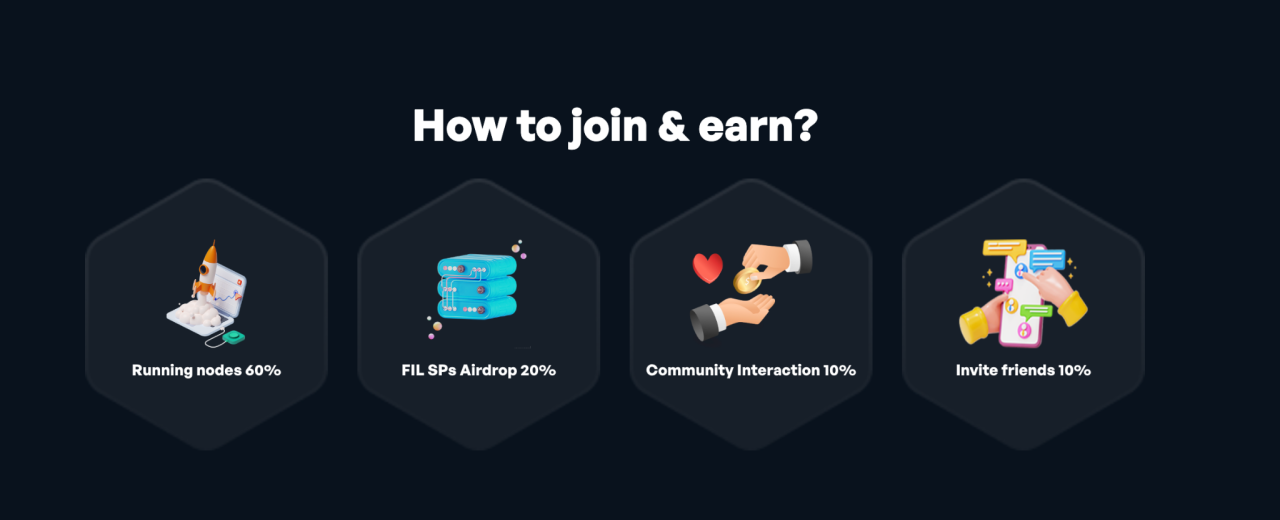
Testnet Data
Node Status
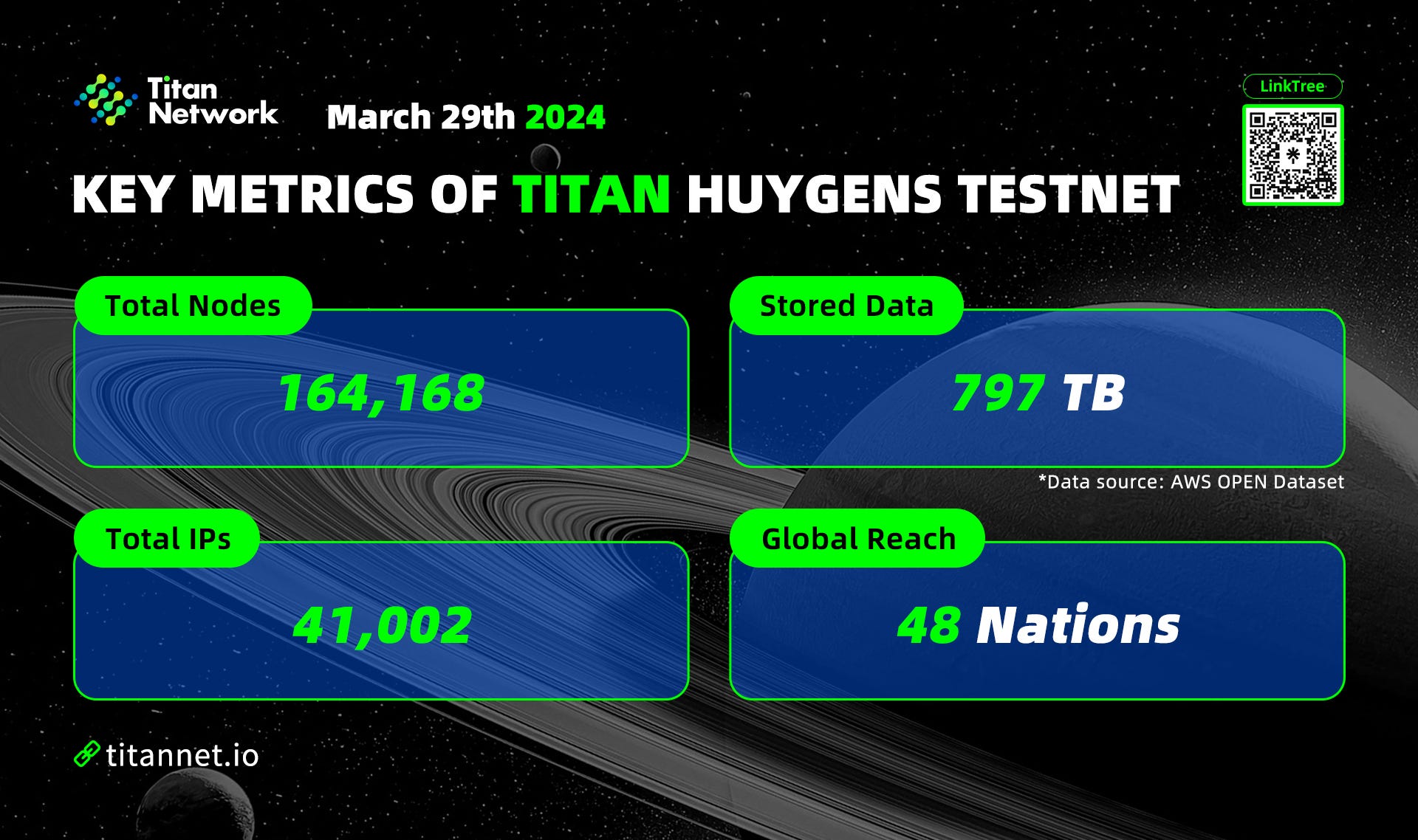
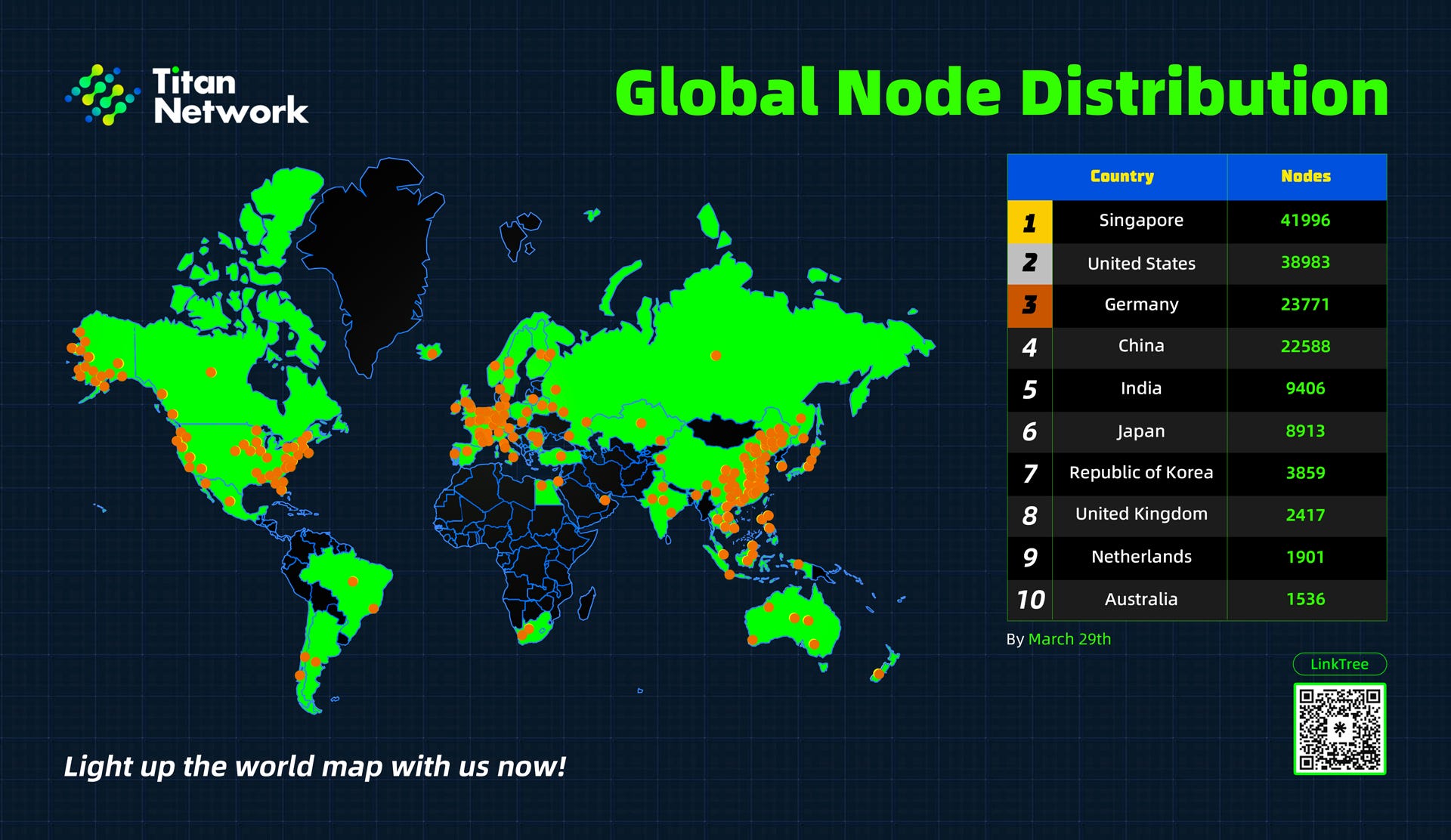
As of now, the total node count stands at 164,168, with more than 50,000 of these being online. This represents an 3500% surge from the 4,584 nodes recorded on March 12.
Network Resources
At present, the total storage capacity is 2,706.62 TB, of which 797 TB is in use. In terms of computing capabilities, the network boasts over 239,926 CPU cores and 756,071 GB of RAM for computing power. Bandwidth-wise, the network impressively supports around 41,002 valid IPs. Finally, the average traffic contribution per node has already surpassed 100 GB and is on track to continue to grow.
In Conclusion
In the last six months, the DePIN (Decentralized Physical Infrastructure Network) concept has sparked widespread interest and discussion worldwide. Among the frontrunners, Titan Network has marked its territory as a formidable leader by attaining more than 3500% growth in global nodes within just 3 weeks.
The network's success in connecting unused, idle community resources with global needs highlights the vast potential of DePIN services. Titan Network goes a step further than just offering an open-source DePIN platform; it enriches its ecosystem with an innovative economic incentive model and advanced technical framework, encouraging active participation and mutual benefits for all involved.
With the rollout of its first testnet, "Huygens," Titan Network is on an ambitious path to expand its reach, enhance its technological offerings, delve into commercial ventures, and solidify its standing in the digital resources realm.