

Reading Time
5 minutes read.
TL&DR
- The decentralized cloud replaces centralized data centers with user-powered networks where people share bandwidth, storage, or compute and earn tokens.
- It lowers costs, increases global access, and gives individuals ownership and rewards for contributing real infrastructure.
- Titan Network leads this shift by letting users easily join, share device resources, earn $TNT, and help power services like content delivery, AI data tasks, and storage.
Overview: Why This Matters
Almost everything we do online from streaming and storage to AI and apps runs on the cloud. But behind all that convenience lies a system that's centralized, expensive, and controlled by a few large companies.
A new model is emerging: the decentralized cloud. Instead of relying on massive data centers, this model runs on people-powered infrastructure where anyone can share spare bandwidth, storage, or compute power from their own devices. And get rewarded for it. This shift is part of a broader movement known as DePIN Decentralized Physical Infrastructure Networks.
In this guide, we'll break down:
- What the cloud is
- Why it needs to change
- How decentralized alternatives work
- And how you can be part of it
1. What Is "The Cloud," Really?
Despite the name, the cloud isn't in the sky. It's a network of physical computers called servers that store, process, and deliver data over the internet.
When you:
- Upload a file to Google Drive
- Stream a show on Netflix
- Ask ChatGPT a question
...you're using the cloud. In each case, remote servers are doing the heavy lifting, so your local device doesn't have to.
2. Who Runs the Cloud Today?
The global cloud industry is dominated by a few tech giants:
- Amazon Web Services (AWS) over 30% market share
- Microsoft Azure
- Google Cloud Platform (GCP)
These companies build:
- Huge data centers
- Proprietary global networks
- Platforms used by nearly every major app and website
And they rent access to this infrastructure at a cost.
3. What's the Problem with This Model?
The traditional cloud is powerful but it comes with tradeoffs:
High Costs: Cloud bills can be unpredictable and expensive, especially for startups, AI projects, and bandwidth-heavy services (like streaming).
Limited Access: Most infrastructure is concentrated in North America, Europe, and East Asia. Many regions still have slow, expensive, or no cloud access at all.
Lack of Control: Your data lives on someone else's servers. You're subject to their policies, pricing, and availability.
Single Points of Failure: When a major cloud provider goes down (like AWS in 2021), millions of users feel it. Centralized systems are fragile by design.
4. What Is the Decentralized Cloud?
Decentralized cloud platforms reimagine infrastructure from the ground up.
Instead of giant data centers, they use:
- Idle devices owned by regular people (cell phones, tablets, and computers)
- Global networks instead of regional hubs (think about it like every person in a city vs one data center in a distant region)
- Blockchains to coordinate and reward contributions (full transparency and no corporate overlord)
If you have spare:
- Internet bandwidth
- Disk space (storage)
- GPU or CPU power
...you can contribute it to a decentralized network and earn tokens in return.
The idea is simple: instead of paying a corporation to rent computing power, the corporations pay you to rent your unused resources and you earn by helping power the internet yourself.
5. Traditional vs. Decentralized: A Side-by-Side Look
Here's how the decentralized cloud compares to what we're used to:
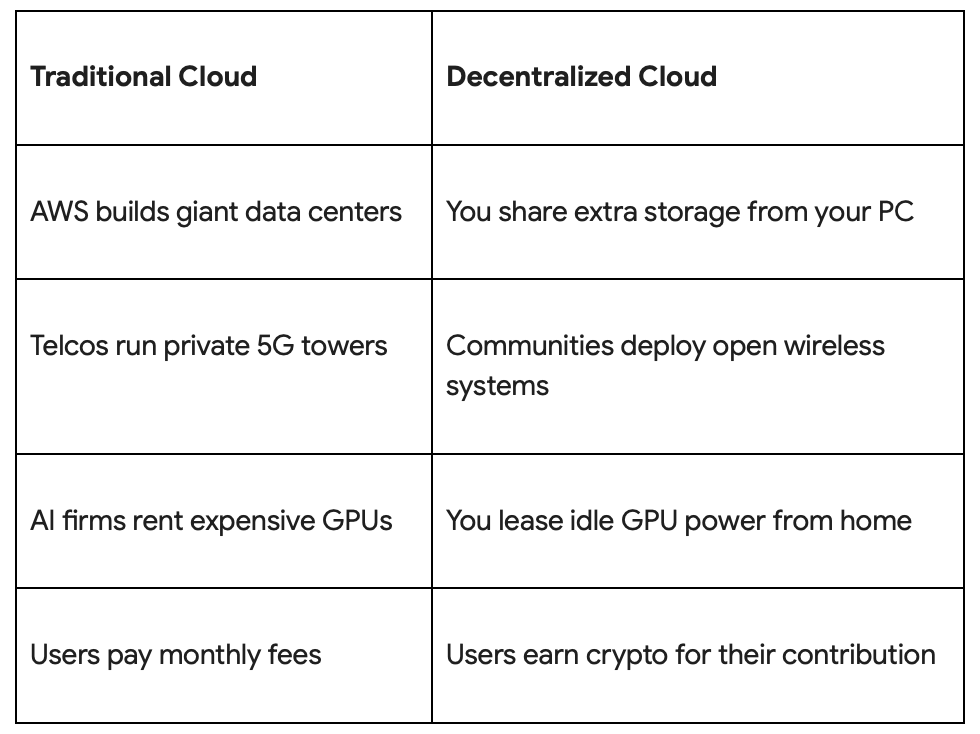
Just like Airbnb unlocked income from spare rooms, decentralized cloud unlocks value from the digital resources you already own.
6. How Does It Work?
Here's a typical flow for how decentralized cloud platforms operate:
- You install a secure app (or browser extension)
- Choose what to contribute: bandwidth, compute, or storage
- Your device becomes a node in the network
- A company on the network (like TikoTok) requests services
- If you device meets the requirements the request is assigned to your device
- The blockchain verifies your work and tracks your contribution
- You earn token rewards based on what you provide
These networks are open, permissionless, and utility-driven meaning you only earn for real, verified contributions.
7. Why the Decentralized Model Works
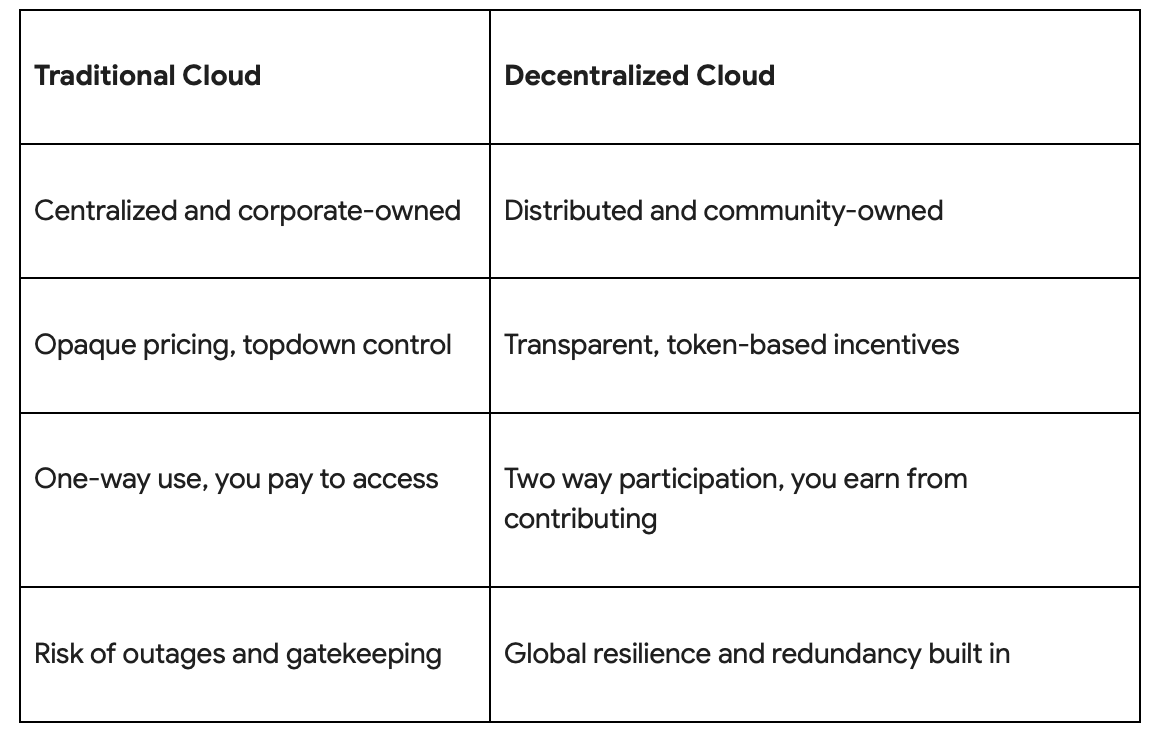
This model doesn't just replicate the cloud, it improves it.
8. Real World Examples in Action
This isn't a thought experiment decentralized infrastructure is already live, and growing:
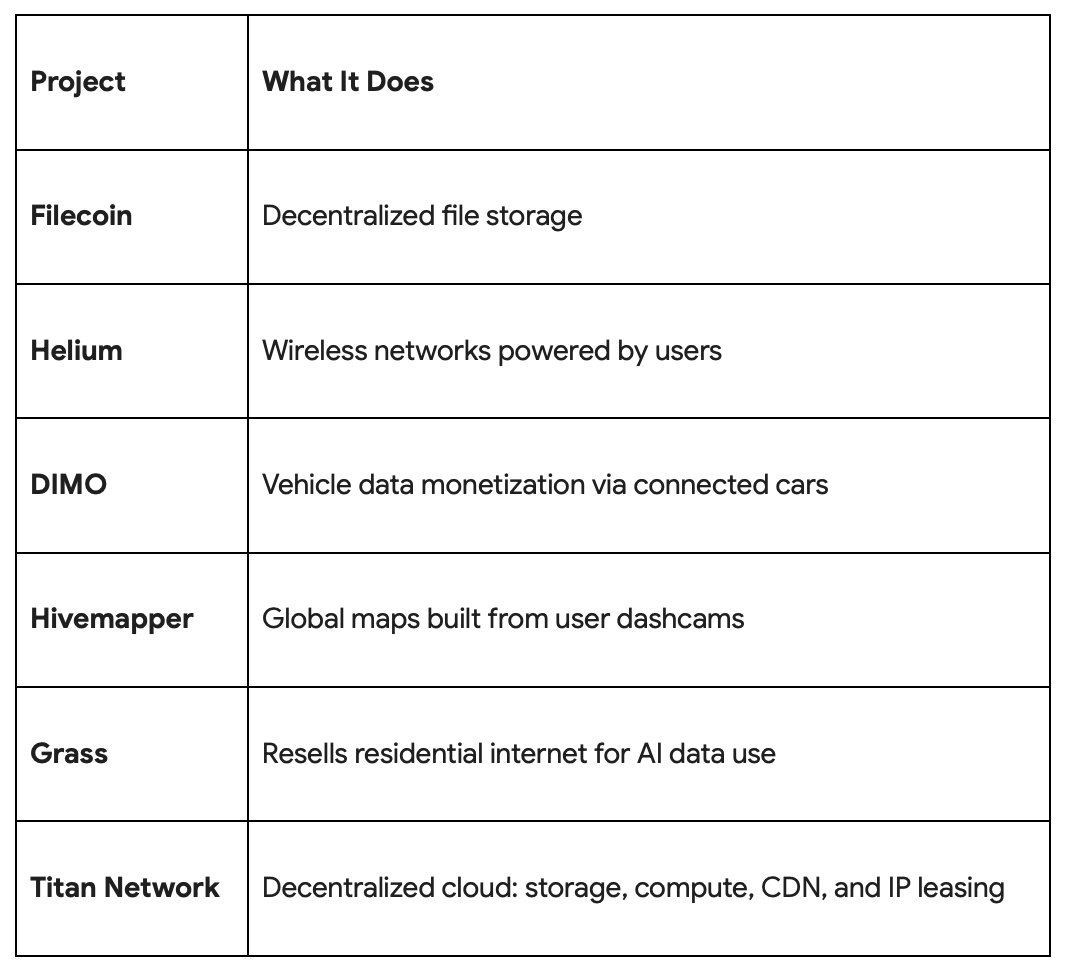
These platforms serve real users and real businesses often at a fraction of traditional cloud costs.
9. Where Titan Network Fits In
Titan Network is one of the most comprehensive examples of how DePIN can scale the decentralized cloud.
It allows individuals to:
- Share unused storage, bandwidth, or IP's
- Run lightweight software (or browser tools) to join the network
- Earn $TNT tokens based on real usage, no speculation
And companies can use Titan to:
- Deliver content faster (via decentralized CDN)
- Run AI data scraping jobs on community-powered IP's
- Storage content
Titan bridges the gap between real infrastructure and community participation making DePIN usable at both the individual and enterprise level.
10. Why This Matters (Globally)
For individuals:
- Earn passive income from devices you already own
- Join without giving up privacy
- Participate from anywhere no technical skills needed
For developers and companies:
- Cut cloud costs significantly
- Expand reach to new regions and edge markets
- Use infrastructure that's resilient, transparent, and user-powered
Final Thoughts: The Cloud Is Evolving
The internet is changing again.
For decades, we've relied on centralized cloud platforms. But they weren't built for global equity, transparent pricing, or community participation.
The decentralized cloud offers:
- Lower costs
- Greater access
- Shared ownership
- Real rewards for real work
And now, anyone can be part of it.